

Introduction
Forex trading looks overwhelming at first. You fire up a trading platform and suddenly there’s this whole new language in front of you: pip, spread, leverage, margin, lot size, stop loss, take profit. It’s a lot, right? So you will learn after reading Forex Trading Glossary For Beginners.
These terms might seem intimidating, but honestly, once you get the basics down, everything starts to make sense.
Understanding this jargon isn’t just helpful — it’s essential. You’ll see these words everywhere: in trading software, market analysis reports, YouTube tutorials, broker websites, financial news, and even in trader chatrooms. If you skip learning what they mean, you’re more likely to get confused or make costly mistakes.
By 2026, forex trading just keeps getting bigger. More people around the world are jumping in thanks to smartphones, trading apps, AI tools, and cloud platforms.
Still, before you risk any real money, you need to know what these terms mean. You don’t want to get lost in the lingo.
That’s where this glossary comes in. It breaks down the most important forex trading words in plain English, with real-world examples and handy tips aimed specifically at beginners.
By the time you’re done, you’ll feel ready to move past the confusion and start trading with confidence.
Before Starting Forex Trading Glossary For Beginners What Is Forex Trading ?
Forex trading is all about swapping one currency for another at the same time. When people talk about the forex market, they might call it the foreign exchange market, FX market, or even just the currency market.
The whole point? Traders want to make money off price changes between different currencies. Let’s say someone thinks the euro will go up compared to the US dollar. They’ll buy euros while selling dollars, hoping to profit if their hunch is right.
Forex is massive — it’s actually one of the biggest financial markets out there.
Currency pairs are how everything works. You’re always dealing with two: something like EUR/USD, GBP/USD, or USD/JPY. The first currency in the pair is the base currency, and the second one’s called the quote currency.
For example, with EUR/USD, the euro is the base currency and the dollar is the quote. If this pair goes up, that means the euro’s getting stronger against the dollar.
The base currency always comes first. In EUR/USD, the euro’s in the driver’s seat. That’s the one you’re actually buying or selling. The quote currency, which comes second, tells you how much you need to spend to buy one unit of the base. For instance, in GBP/USD, the dollar is the quote.
Let’s not forget about pips. This is the smallest change you can see in most currency pairs—usually just 0.0001. So, if EUR/USD shifts from 1.1000 to 1.1005, that’s a move of 5 pips. Traders watch these tiny moves closely because profits and losses are all measured in pips.
Lot Size
When people talk about “lot size” in forex, they mean how big a trade is. The most common sizes are standard lots (that’s 100,000 units), mini lots (10,000 units), and micro lots (1,000 units). Most beginners go for micro lots because it’s less risky — you’re not putting as much on the line.
Leverage Scale In Forex Trading Glossary For Beginners
Leverage lets you use a small amount of money to control a much bigger trade. For example, with 1:100 leverage, you can manage a $10,000 position with just $100. It sounds powerful — and it is — but keep in mind, it can make profits bigger and losses just as big. That’s why if you’re new, you really want to go slow and respect leverage.
Margin
Margin’s what you need in your account to open a leveraged trade. Basically, it’s like a deposit that lets you get in the game. Higher leverage means you need a smaller margin.
Stop Loss
Stop loss is a handy tool that shuts down your trade automatically if it drops to a certain price, keeping losses from getting out of hand. Say you buy EUR/USD at 1.1000 and set your stop loss at 1.0950 — if the price hits 1.0950, your trade closes right there. This helps keep your account safe from big setbacks.
In Forex Trading Glossary For Beginners How To Take Profit
Take profit is the opposite — it closes your trade once your target is hit, so you lock in gains. Let’s say you’re in at 1.1000 and set your take profit at 1.1100; if the price climbs to 1.1100, your trade closes and you pocket the profit.
Bearish Market
When prices are falling, people call it a bearish market. If you expect GBP/USD to drop, you’re a bear, and that’s bearish sentiment.
Bullish Market
Rising prices? That’s a bullish market. If you think EUR/USD is heading up, you’re a bull, and it’s a bullish environment.
Candlestick
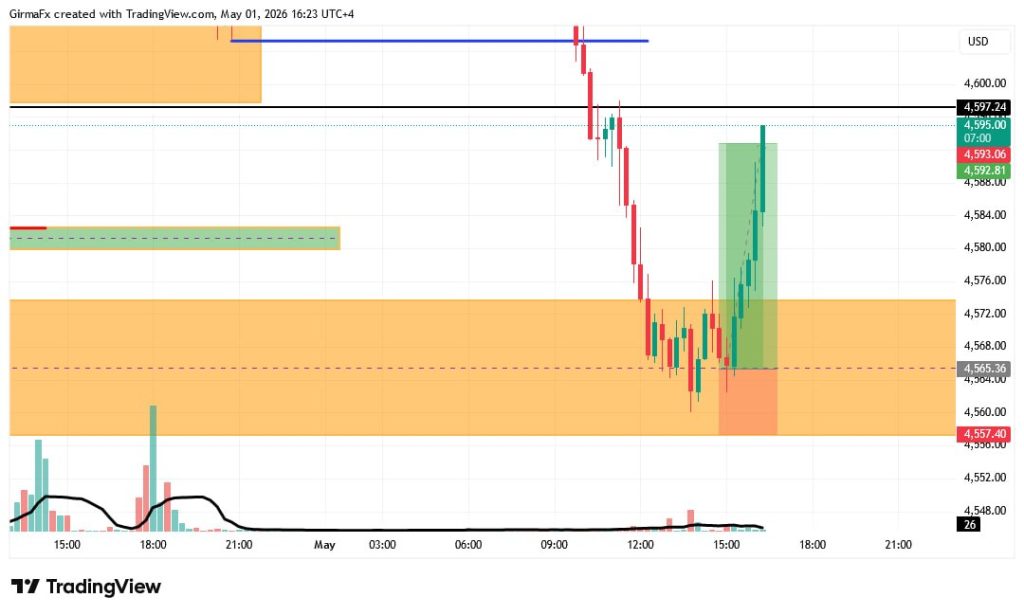
Candlesticks are chart symbols showing how price moves during a certain period. Each one gives you the open, close, high, and low for that timeframe. These charts are all over forex — traders love them for spotting trends and patterns.
Read: Best Forex Trading Apps for Beginners
Spread
The spread is just the gap between the buy and sell price. That difference is where brokers make their money. Lower spreads generally mean you pay less to trade, so traders usually prefer them.
In Forex Trading Glossary For Beginners Forex Broker
A forex broker’s the company that connects you to the forex market. The best ones offer trading platforms, market data, support, and education. Picking a reliable broker matters a lot — it’s basically your doorway to trading.
Trading Platform
A trading platform is the software traders use to make trades, monitor charts, and manage accounts. MetaTrader 4 and MetaTrader 5 are both popular picks. These let you place trades, analyze the market, and keep track of everything in one spot.
Market Order
When you place a market order, you’re jumping right into a trade at whatever price the market’s offering at that moment. It’s simple and quick—probably why most beginners start here.
Pending Order
A pending order lets you set things up in advance. You tell your platform to open a trade only when the price hits a certain target. There are a few types: buy limit, sell limit, buy stop, and sell stop.
Trend
A trend is just the way the market’s moving overall. Sometimes it’s heading up, sometimes down, and other times it’s just bouncing sideways. Traders often try to follow trends to catch bigger moves.
Retracement With Forex Trading Glossary For Beginners
A retracement is when the price momentarily moves the opposite way of the main trend. So, in an uptrend, you might see prices dip for a bit before climbing higher again.
Support Level
Support is a price point where falling prices tend to pause or bounce back. Traders look at these levels for chances to buy in, hoping the price will climb after hitting support.
Resistance Level
Resistance works the opposite way—it’s where rising prices usually start to stall or reverse. Lots of traders watch these spots for selling opportunities.
Technical Analysis Of Forex Trading Glossary For Beginners
Technical analysis is all about reading charts and indicators to figure out where prices might go next. Tools like trend lines, RSI, MACD, and moving averages are pretty common in forex.
Read: Gabaa Forex keessatti Qorannoon Teeknikaa Maali (What Is Technical Analysis in Forex)?
Fundamental Analysis
Fundamental analysis digs into economic and political news—anything that can influence a currency’s value. Things like interest rates, inflation, jobs data, and central bank moves can send prices swinging.
Central Bank
Central banks, like the Federal Reserve or the European Central Bank, steer a country’s money policy. Their decisions—think rate hikes or cuts—can really shake up forex markets.
Read: How Banks Influence Forex Market Prices (Complete 2026 Guide)
Economic Calendar
An economic calendar keeps you in the loop about major financial events and news releases. Traders check calendars for stuff like interest rate changes or GDP reports, since big news can make prices jump.
⚡ Volatility In Forex Trading Glossary For Beginners
Volatility just means how quickly and wildly prices move. When volatility’s high, prices make big swings; when it’s low, things stay pretty steady.
Margin Call
If your account starts losing too much and you don’t have enough funds, your broker might ask for more money or start closing trades for you. That’s a margin call—and the reason risk management matters.
Risk Management In Forex Trading Glossary For Beginners
Risk management is all about protecting your trading money. Smart traders use stop losses, keep their trades sensible, watch their leverage, and manage how big each position is. Ignoring risk is one of the main reasons people lose their accounts.
Demo Account
A demo account lets you practice trading without using real money. You get to try out different platforms, test your strategies, and build up confidence—no risk involved.
Expert Advisor (EA)
An Expert Advisor is an automated trading tool—almost like a robot that handles trades for you, especially on platforms like MetaTrader. EAs can open and close trades based on a set strategy, but they aren’t foolproof. You still have to watch out for risk.
In Forex Trading Glossary For Beginners Trading Strategy
A trading strategy is your blueprint—it lays out when to enter and exit trades and how you’ll manage risk. The most successful traders stick to their plan and don’t wing it.
⚠️ Common Beginner Mistakes With Forex Trading Glossary For Beginners
Here’s where beginners get tripped up: using too much leverage, forgetting stop losses, trading way too often, and letting emotions call the shots. If you learn the basic forex terms and keep your cool, you’ll dodge a lot of these pitfalls.
Why Bother Learning Forex Terms?
If you’re just starting out in forex, getting familiar with the jargon really speeds things up. You won’t be scratching your head at every new concept or trading strategy. It keeps you out of the confusion zone, boosts your confidence, and makes market analysis way less intimidating. Basically, the better you know the lingo, the stronger your base for everything that comes next.
What’s Ahead for Forex Trading?
Forex isn’t sitting still — it’s picking up speed as technology changes. Looking forward, expect to see more AI-based trading tools, automated analysis, and platforms designed for your phone first. Trading’s getting smarter, and more people are jumping in. All these advances mean forex is opening up around the globe in ways it never did before.
Final Thoughts On Forex Trading Glossary For Beginners
Learning forex terms isn’t just a box to check. It’s one of the first things every beginner needs to tackle. Words like pip, leverage, margin, stop loss, trend, and support and resistance — these aren’t just buzzwords. They’re the building blocks for understanding how this market actually works.
Sure, forex offers plenty of opportunities, but you can’t ignore the risks. If you’re new here, focus on learning, practicing, managing risk, and—maybe most important—being patient. Don’t start by risking a chunk of your cash.
Stick with the basics, pay attention to the language, and trading gets easier and clearer the more you do it.